
While conversing with my dog, I was thinking and questioning my own logic behind how I look at cards and determine whether or not to slot them in my deck. I want to reiterate, once again, there’s no singular way to build a deck. I will say that compared to other card games I’ve tried, Weiss can be a little bit rigid, but there is still some space for flexibility when it comes to making your own deck.
So my dog was considering building the new Project Sekai deck and looking to modify their version of their Nightcord deck. So, what we’ll be doing in this post is looking and diving into the exact thought processes that go into how to build around our theme and look for cards that work well within the deck’s synergies. You can look into the old Nightcord deck here.
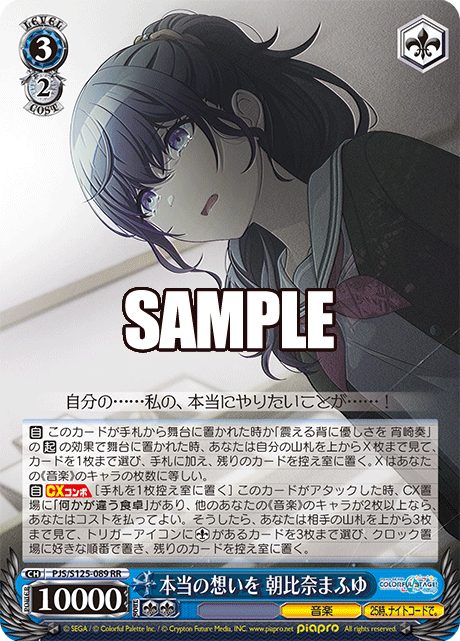
When beginning with revising a deck, we should prioritize and identify the main objective of the deck. That is to say, in Weiss terms, identify the finisher since that is our primary way to achieve victory over our opponent. Decks are built and tailored mainly for the endgame since that is where your resources are typically pushed and stockpiled for.
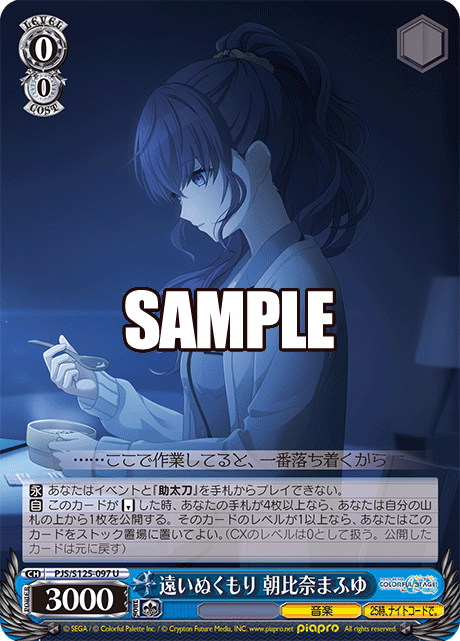
With the newest set, my dog wanted to move away from old Ena level three combo in favour of our new Mafuyu above. So firstly, let’s identify what this finisher actually does. Mafuyu pays a cost of a single hand on attack with her climax to reveal the top three cards of our opponent’s deck and then places up to three cards with soul icons in their trigger zones into our opponent’s clock. That is very powerful as this is one of the few ways in Weiss to guarantee damage since the cards placed in clock don’t constitute as damage.
So, in terms of set-up, we need to obviously pay for Mafuyu to enter the board. On top of that, we need hand to pay for Mafuyu’s climax combo cost. However, if we look at her primary ability, we can see that Mafuyu checks the top of your deck when she enters the board based on the number of characters that we have on the field. As such, Mafuyu can readily refill her own hand costs and potentially dig for her own climax from our deck as well. In short, Mafuyu is a very efficient finisher in terms of paying for her climax ability. However, there is a potential downside to Mafuyu. Mafuyu’s combo is completely reliant on your opponent’s top deck. Furthermore, depending on the matchup, Mafuyu may be in for a very bad time, especially if your opponent is running climaxes without soul icons.
Mafuyu’s damage is limited, and outside of some key exceptions, there’s probably not much that can be done besides hopefully shuffling soul icons back into your opponent’s deck.
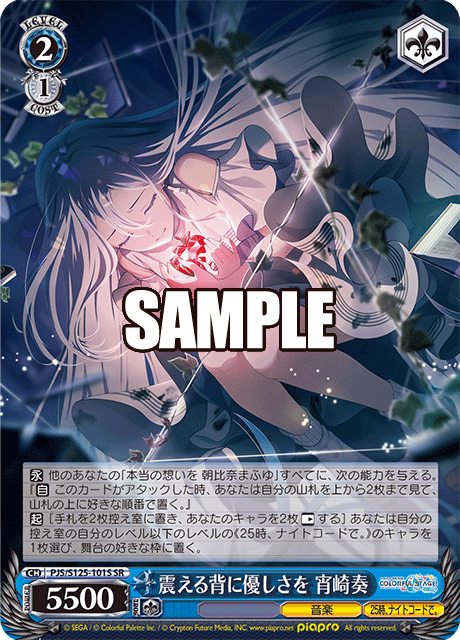
The first thing we want to do is look for direct synergies that work with our finisher. Level three Mafuyu has a direct connection to the 2/1 Kanade shown above. However, just because a synergy exists doesn’t mean that the synergy may be best suited for the deck. In this case, Kanade’s support here is just alright at best. She does let you spawn Mafuyu onto field at level three through an alternative expensive cost, but I don’t think it’s worth it. Her other ability does give Mafuyu a top deck check and rearrange for her attack trigger (your own deck), but I don’t think that really matters much to Mafuyu’s combo. So, in summary, Kanade is an option for the deck if you’d really want it. It’s not necessary, but it could be a niche one-of that could come in handy occasionally.
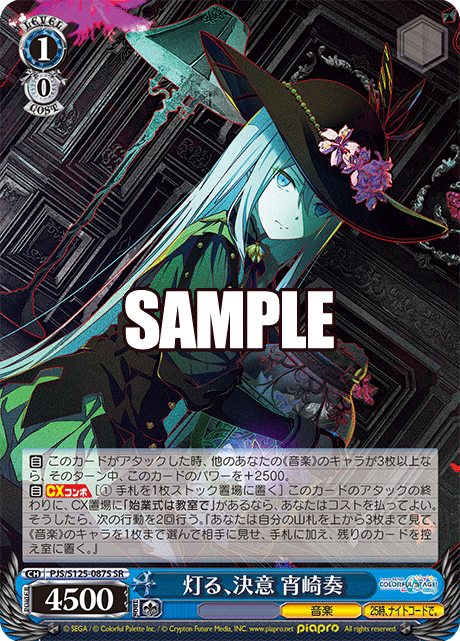

Moving on, let’s take a look at our early advantage combos to refill our hand and generate resources for the late game. The most immediate choices that come to my mind are shown here with the new 1/0 Kanade and old 1/0 Ena. Both cards have upsides and downsides. I wouldn’t claim that one of them is significantly better than the other. Beginning with Kanade, this combo lets us filter through our deck for characters twice. By herself, ignoring her swing, Kanade lets you check three twice and mills about six cards in total. If you want a combo to get through your deck as fast as possible, Kanade is the best choice here comparatively to Ena. Ena, on the other hand, doesn’t provide you with the same mill. However, Ena exchanges that mill power for selection, giving you the ability to search your deck out to grab any two characters you would like for your upcoming turns. Ena does also filter your hand, letting you potentially use any waiting room synergies if available for the deck. Keep in mind that Ena does have a drawback of needing a reverse and requires a character in memory to give herself power during your turn.
We want to look and compare these two combos like apples and oranges. Both fulfill the purpose of being fruits, but their appearances and values do differ. Kanade offers you the ability to mill your deck, and as an upside for your combo, you can always fix any unwelcome triggers on her attack since part of her cost requires sacking a stock and refunding it with a card from hand instead. Ena gives you selection and resets your deck state, removing cards from the deck you would rather not have triggered instead.

In the case of Ena, she can greatly support other cards such as that of the Kagamine Rin above that does require top checking to better her chances of acquiring the advantage stated. You can simply remove cards that don’t meet Rin’s condition with Ena to improve your odds of securing the extra stock supplied by Rin. In this situation, given the extremely loose costs to play our Mafuyu finisher, either combo shown above will work perfectly fine and would also greatly depend on the other cards they synergize with. Furthermore, given that both combos will use an arc climax (all Nightcord climaxes are arcs), we don’t have to use their climax trigger for any comparisons. You are also welcome to use the other early game combos as you see fit. It depends entirely on your personal playstyle and also the gaming environment around yourselves.
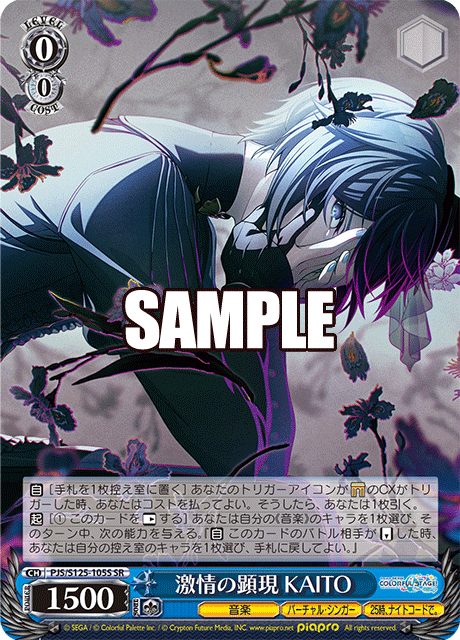

Granted, as stated before, all Nightcord combos are on arc triggers, meaning that we should take advantage of this fact and run some arc trigger support cards like Kaito and/or Mizuki. The key point to put here is that you can run either or, meaning you can run one of the two solely or mix them together. This is once again dependent on preference, but these cards provide additional value and can transform the climax returned to hand from triggering arc climaxes into different resources depending on your immediate needs. They can also be flexible. Kaito provides a redraw when an arc climax is triggered and has a consistent reusable ACT ability to give a character on-reverse salvage. Mizuki gives you immediate discard and character salvage on arc climax trigger, but she also empowers one of your other characters when she does so and is a global support. Depending on how your deck plays, either and both could be quite beneficial. In the case of Mizuki, if you are using 1/0 Ena, that bit of power that she provides when an arc climax is triggered and her static global power support can be quite relevant for the reversing condition as well.
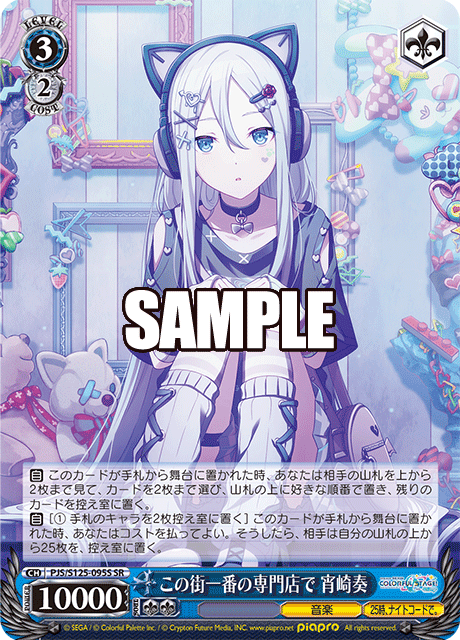
While not immediately important to the deck, the new Kanade support here betters your odds of hitting your first Mafuyu combo and should thus be considered for its utility. She can also forcibly mill your opponent’s deck, possibly into a more disadvantageous situation. Keep in mind that 3/2 Miku from the original set also carries a Fumio ability which could be an alternative to Kanade as well.


PJS/S109-085SSP-SSP あたたかい愛情の記憶 朝比奈まふゆ (center)
PJS/S109-097U 必要な距離 MEIKO (right)
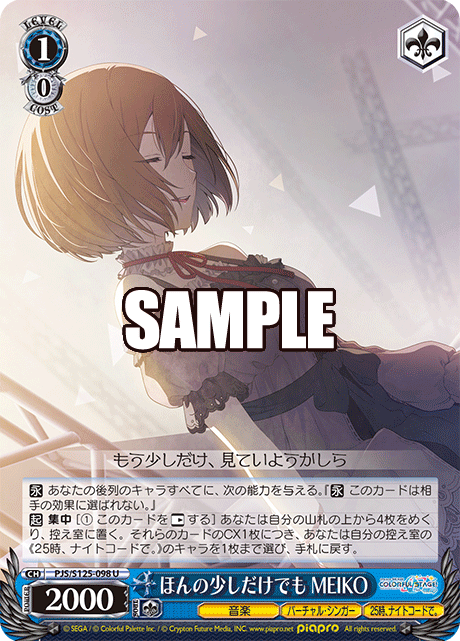
Now that we have our skeletal structure in place, we need to fill in the gaps with the muscle and sinew to get the deck running. 1/0 Meiko is a new addition that is an alternative to the already existing brainstorms for the deck. The key thing with Meiko here is that she is level one, meaning that she’ll help with any level one or higher conditions on cards such as that of Rin and some other support cards like old 0/0 Fukaziroh Kanade. Her bonus to give your entire backrow hexproof is rather random, but if you would like to run this card in conjunction with the new 2/1 Mizuki combo, this would make a great pairing to protect both cards from your opponent’s removal. Classic cards like Baby Mafuyu in the center make a return, helping with maintaining consistency for the deck by helping you with searching out your cards. 0/0 Meiko also returns to sacrifice our board to trigger a search effect and also procure their sent-to-waiting-room abilities.

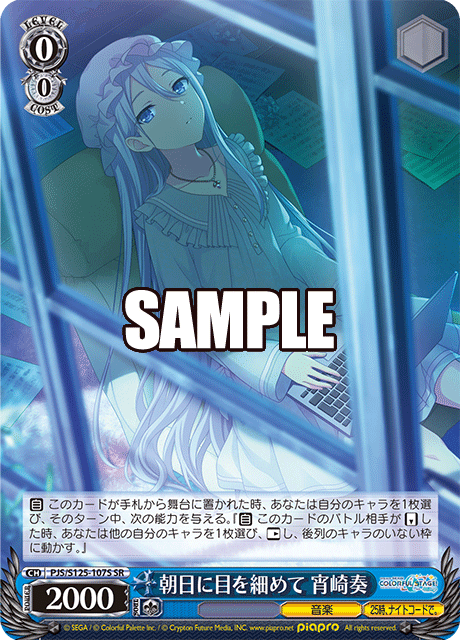
PJS/S125-107S-SR 朝日に目を細めて 宵崎奏 (center)
PJS/S125-097U 遠いぬくもり 朝比奈まふゆ (right)
Now this the part where our creativity shines the most. Filling out the next few slots of the deck, we check for cards that will be able to interact with our opponent’s board or help facilitate our game plan. Keep in mind that these cards can be highly meta dependent, and some of the effects do need to be better catered to in your deck design, whether that be through different cards or manipulating deck ratios. Looking at the new set, 1/0 Mafuyu is a wonderful bottom deck reverser that also acts as a Koume profile. Newly printed Kanade here gives the Clean Cut effect to one of your characters, letting you cheat them into the backrow for safety or to reset their board status. You can even apply this ability to something like Mafuyu eating congee which can potentially provide two turns of increased stock gain and board presence with a bit of luck.
Keep in mind that this section is very much dependent on your local meta and your own personal choices. Feel free to test around and see what goes well for you.



PJS/S109-104C 言葉にしてほしくて 東雲絵名 (center)
PJS/S91-096C 『いい子』に見られる優等生 朝比奈まふゆ (right)
Now before we finish up, we want to take a look at the last part of cards to consider, backups. So given the low cross-turn power of our cards, backups are once again relegated mainly for their utility purposes. New Len is especially useful because of his modular choice on use to mill either ours or our opponent’s deck with his initial ability based on our number of climaxes in waiting room. However, don’t sleep on 2/1 Ena or 1/0 Mafuyu. 2/1 Ena can be used to transform extra stock into a character we need from waiting room while simultaneously defending a character. Even 1/0 Mafuyu can come in clutch, especially if you are in a local meta that’s lacking early game power. All three can be used to check for level one or higher abilities too, which are cards very common among the Nightcord unit.





As for the rest of the cards, fill in the gaps with utilities or other consistency cards that you find relevant to your gameplay experience. Personally, as of the current timing of this writing, I dislike early plays because I feel they detract resources that could be better used for your finishers. However, that’s just my thought process. You can also vary the different early plays you can consider. Early play Ena is a choice that can be sticky on the field if your opponent is unable to permanently remove her. However, Mizuki by the sunset is also an option to filter through your deck for a card. This is where you can feel free to brew with all manners of generic filters such as 0/0 Fukaziroh Kanade or mess about with 0/0 CX swapper in memory with Mafuyu. Have fun and enjoy the process of modifying and then testing out your deck. You don’t have to keep the deck the same either. Feel free to adjust as you feel like based on your own thought processes and game experiences.