
So, back in 1996, a silent protagonist along with his friends is dragged into a warped environment of a school where daemons inhabit every corner, seeking to rip people’s throats out or scam them for a large chunk of money, mana, or items before laughing away out of existence with your offers (and then slashing your throat). Wait, the first Persona game isn’t in Weiss? I’ve been scammed.
Persona is a strange franchise. In its history, it was originally a fork or alternative to the older more established Shin Megami Tensei series. Shin Megami Tensei was, therefore, the introduction to many of the common systems that are in place for Persona. It is impossible to define Persona without some understanding of Shin Megami Tensei. In Shin Megami Tensei, the stories are rooted in conflict between morality of humankind versus that of both the forces of order and chaos. This does not directly translate to the traditional simplification of good and evil. Order doesn’t necessarily resemble the former similarly to how chaos doesn’t necessarily represent the latter either. Persona is a version of Shin Megami Tensei (shortened to SMT from now on) which shares a more grounded story, often taking place in a high school setting.
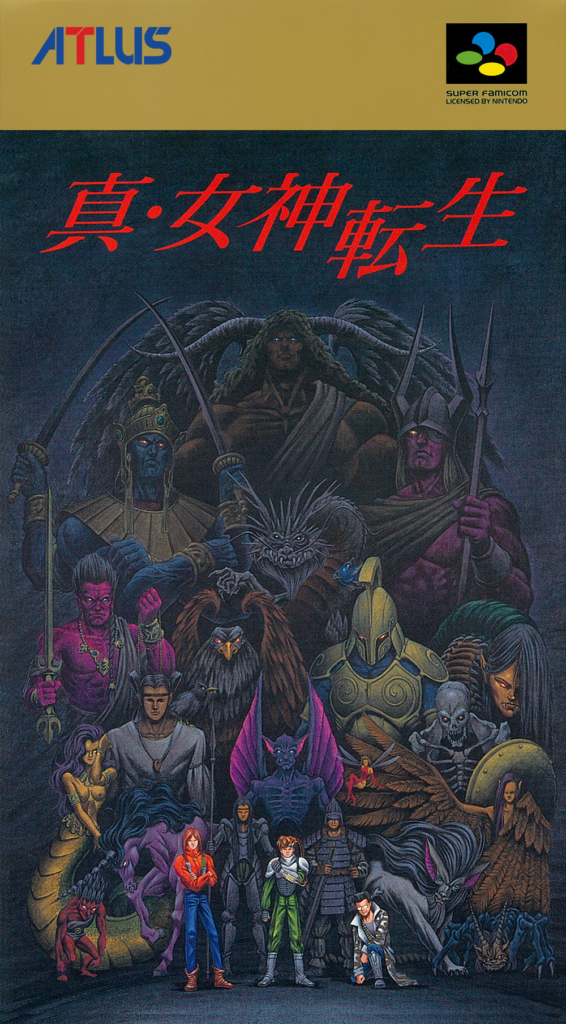

This doesn’t mean that Persona is a weaker version of SMT by any accounts. The story diversion changes from a more apocalyptic setting to one where the conflicts of order and chaos have been transformed to affect an inner person’s conflicts and ideals rather than an overarching world based around these concepts. What is reflected then is that the same battles against daemons remain, but the troubles of the series are more grounded in a relatable sense from personal struggle rather than a direct fantasy motif.
With that out of the way, let’s talk about the general systems by which all Persona games abide by. In Persona, comparatively to SMT, characters are assigned a certain arcana that they carry affinity with. These are represented by the various tarot cards that are emblematic to the games. Daemon contracts are thus based upon the arcana by which a character resonates with. In the earlier games, until Persona 3, characters could actually use daemons outside of their own arcanas with weaker effects and values, but this changed with Persona 3. From that point on, daemons that a character could summon were limited to their specific arcana line-up. Rather than thinking of Persona as a classic RPG with a larger-than-life final villain, the key drive of the series are the stories embedded within that depict the day-to-day human inner struggles that are felt by its characters (both heroes and villains) that are invisible to the naked eye. Feelings of inferiority, envy, and other malicious thoughts are manifested into reality, brought upon by the persona of the characters that carry those emotions. The archetypal villain, as a result, is almost always a conflict with one’s self. Man is fighting their own inner struggle. And that, at least to me, is the foundational breakdown of what Persona truly embodies.
Otherwise, the games play-out, starting from Persona 3, as life simulators with RPG elements on the side. Often joked about and divisive among fans, these life events are crucial as they give a background as to character identity while also highlight the relationships that affect the very emotions that drive character ambition and struggle. The RPG elements carry heavily from SMT and make use of a number of elements, requiring players to play around weaknesses that enemies carry, swapping between units to capitalize on certain strengths, and etc. Overtime, Personas, the main fighting force of the protagonists, can evolve into more powerful beings whether through level ups or advancing the stories.


As a slight disclaimer, you’ll see various versions of the Persona games above with additional small titles like “Fes” or “Golden”. Persona has been remade with additional features which are added onto the main game and are given those slight title changes. They are fundamentally the same games with added content. I will not be including Persona X which is a mobile game title but is exclusive to the Chinese side of Weiss Schwarz as of this writing.
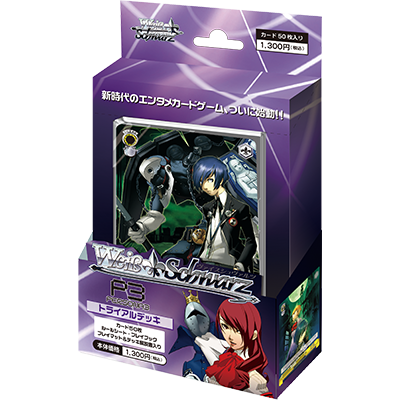
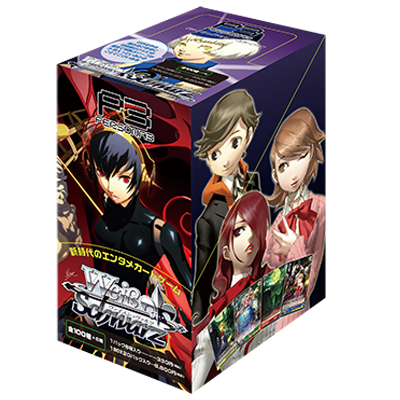
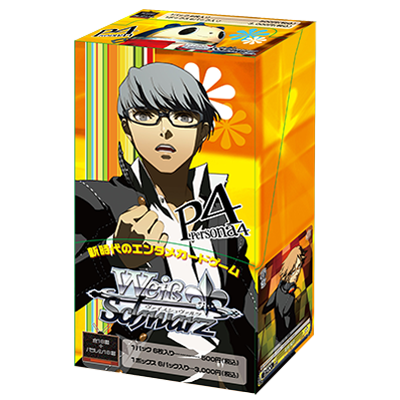
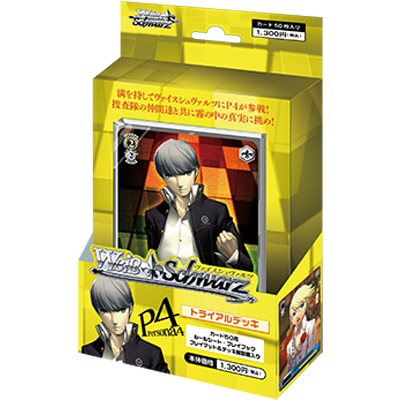
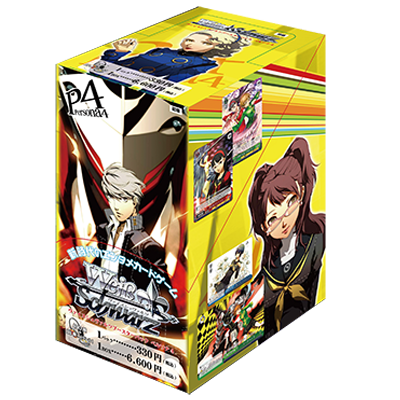
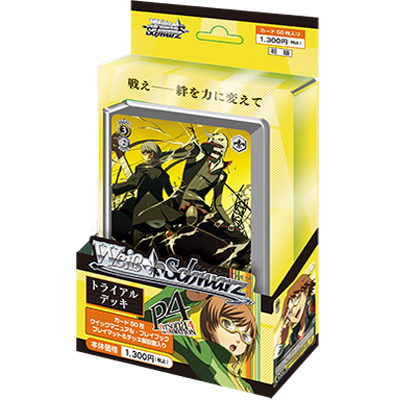
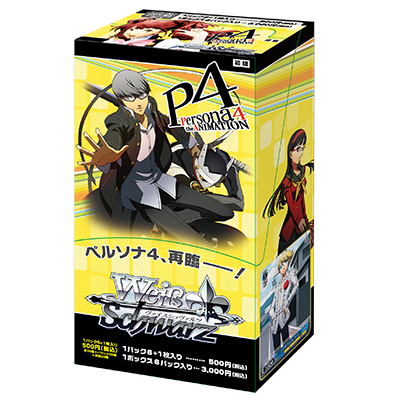
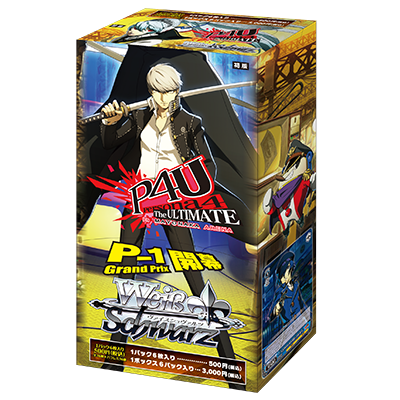
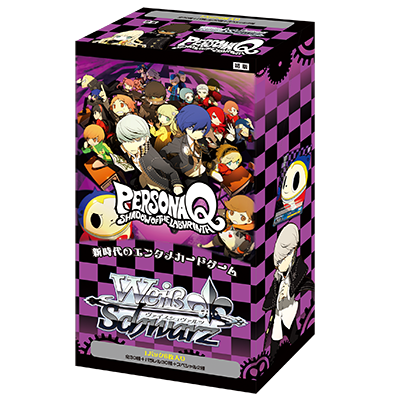
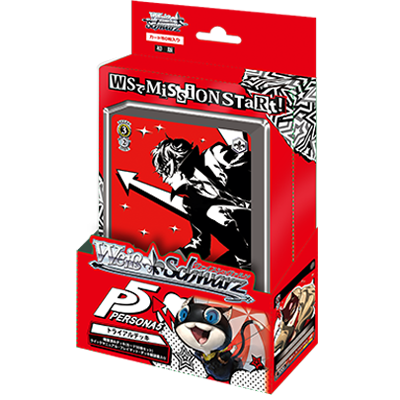
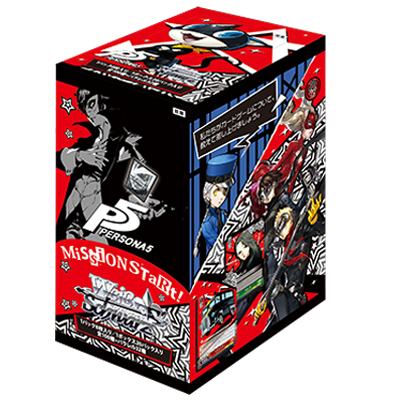
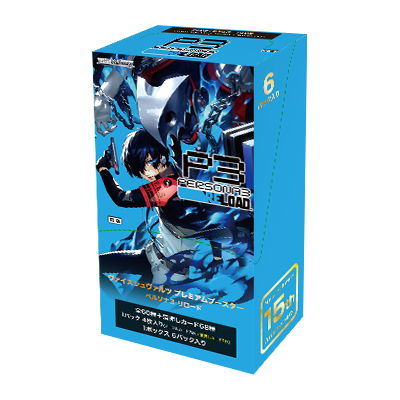
Persona is one of Weiss’ longest running titles to date. The first set for the series debuted with Persona 3, releasing in 2008 with a trial deck and a booster following a few months later. A year later, the first set for Persona 4 came out in early 2009 with its own extra booster. Later that year, we received the release of the trial deck for Persona 4 with its own specialized booster following after. It wouldn’t be until 2011 until Persona received more support with a trial deck for its anime debut. This was followed up with an extra booster support in 2012. In 2013, the spin-off fighting game, P4U got an extra booster. One year later, the mix-up with P3 would occur with Persona Q’s extra booster. It wouldn’t be before 2016 until Persona got new product following the debut of Persona 5’s trial deck and simultaneous release of the full booster. Again, a drought for the series would occur until the remake of Persona 3 with P3R in 2024 with a premium booster. Cowards never made sets for the Dancing All Night series.
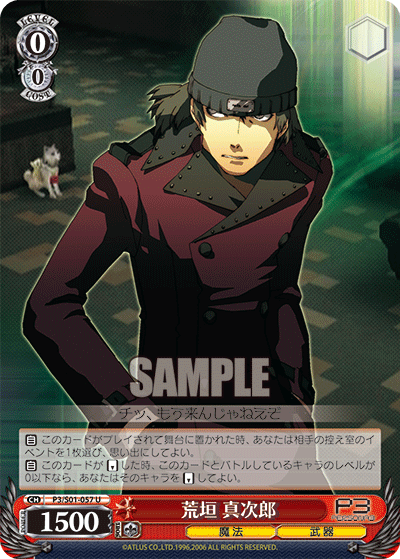
P3/S01-057U 荒垣 真次郎 (center)
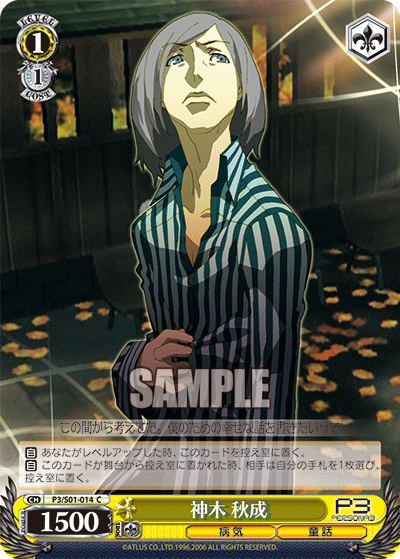
P3/S01-014C 神木 秋成 (right)
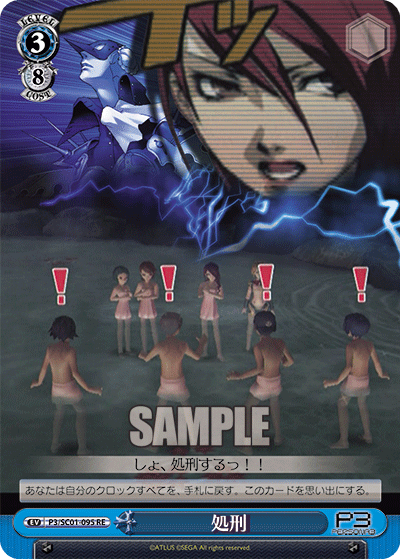
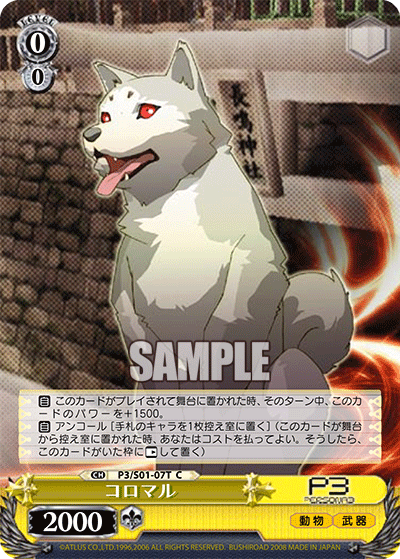
Each of the various games have their own set-in universe, and despite sharing systems, the games are independent of each other (regardless of fan theories). As such, they can play relatively different from one another; although, because of the shared title and series code, you can combine them if you so wish. Beginning with Persona 3, the original cards have been quite dated. As one of the oldest series in the game, the original cards felt a bit random and out of place with one another. This could be canonical, reflecting the wide varieties of different personas and personalities each character had. As such, character traits were not uniform, and effects were widespread. This was also the time when cards had a different visual scheme which is a reminder and relic of Weiss’ past exemplified by the goodest boy below. This was also where one of the longest banned cards in the game debuted and will probably remain on the banlist indefinitely due to its relatively unfun play patterns with Akinari above.
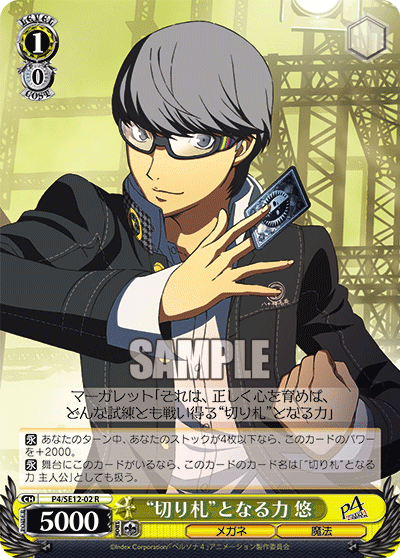
P4/SE12-02R “切り札”となる力 悠 (center)
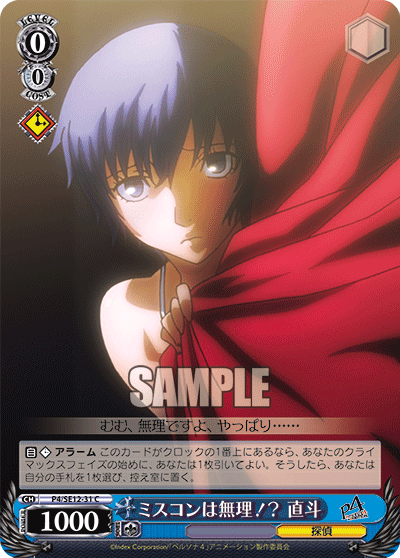
P4/SE12-31C ミスコンは無理!? 直斗 (right)
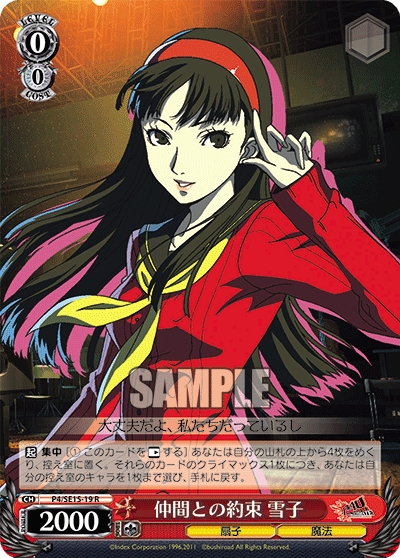
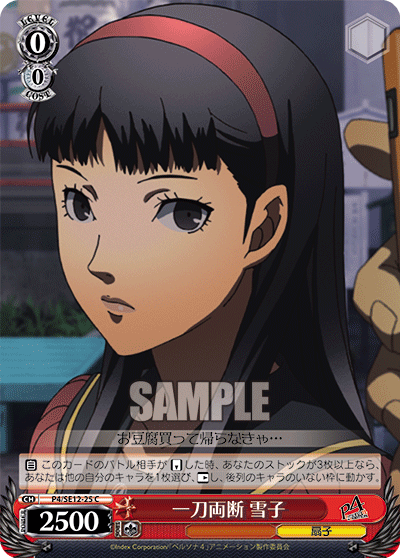
By the time of Persona 4’s debut, Persona as a series had changed. Traits were now more of a commonality; although, not every character had succinct and similar traits. Throughout the series, as the game developed with the later boosters, the characters would receive relatively similar traits such as that of Glasses (メガネ) or Magic (魔法). This was also where the infamous profile “Clean Cut” comes from with Yukiko’s common below. Builds felt like a mish-mash of characters with some occasional complications stemming from lack of unified identity.
I won’t get it into it too much, but Persona Q was an odd-case where it really felt more of a stand-alone unit rather than combining with the previous Persona sets. It did feature characters from the older P3, and you could combine it with some synergy in that sense, but given the rather all-over-the-place designs of the olden times, you would probably be playing that set purely on its own.
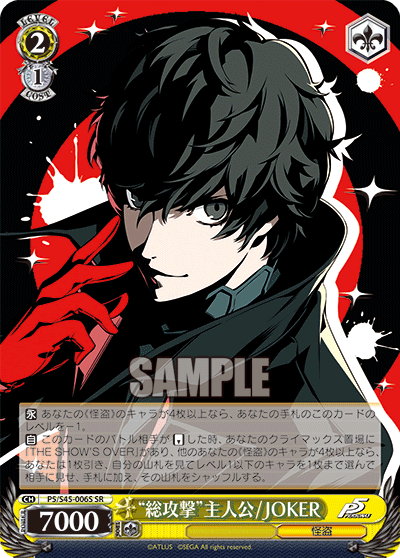
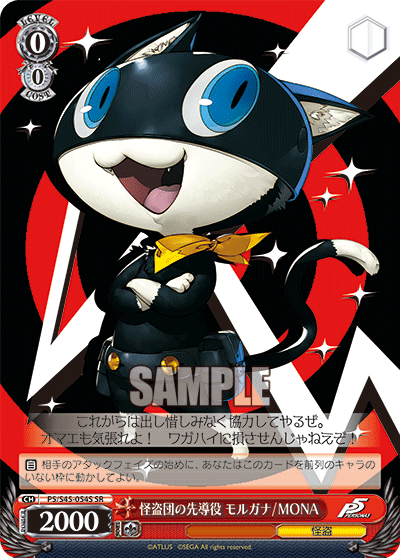
P5/S45-054S-SR 怪盗団の先導役 モルガナ / MONA (center)
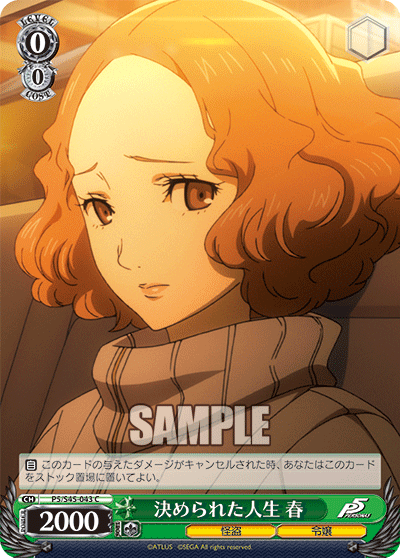
P5/S45-043C 決められた人生 春 (right)
By the time of Persona 5, the game had long standardized traits and everyone here was essentially, for the most part, at least for the main cast, given the Phantom Thief (怪盗) trait. This meant synergies were especially limited to this set since characters couldn’t easily recall traits from older series. You could attempt so, but you’d be struggling to fetch cards. There’s a few odd cases such as that of the fun Protagonist [主人公] deck which focuses on messing with the nomenclature of each silent protagonist. As such, Persona 5 didn’t really make any callbacks to the older series at all. As said before in the introduction, all the Persona games technically exist within their own universes outside of the original two which aren’t shown in this game unfortunately. As such, they pretty much all work independently without each other.
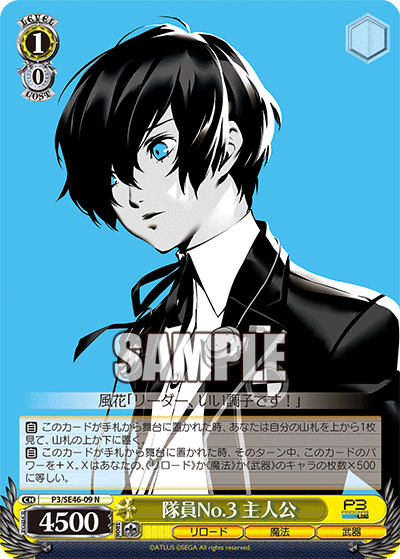
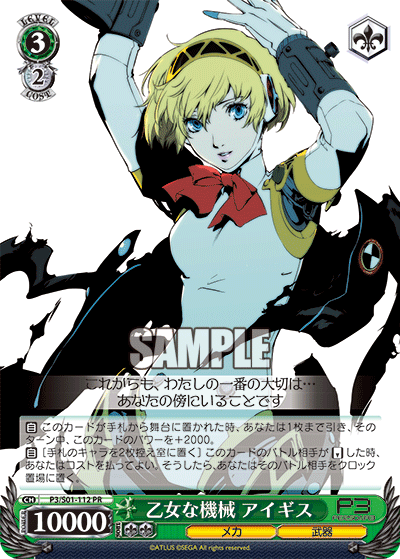
P3/S01-112PR 乙女な機械 アイギス (center)
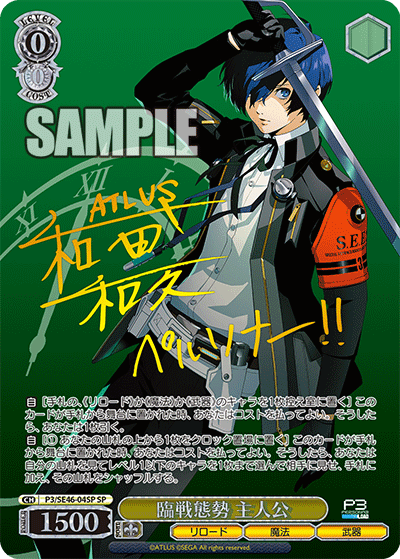
P3/SE46-04SP-SP 臨戦態勢 主人公 (right)
P3R or Persona 3 Reloaded is a full-on remake of the original Persona 3. There are a few callbacks to older cards, but mechanically speaking, this set is also stand-alone. Many of the effects have been modernized and updated. Characters have been given a singular connected trait with Reload (リロード) and some unifying ones such as Magic (魔法). Meaning, unlike Persona 5, there is a genuine possibility of including and combining cards from older sets with some amount of synergy due to some of the older listed traits.
At this point, Persona is quite an old series comparatively with other sets. It’s last support was in P3R which unfortunately, was a small premium booster, leaving the series with a relatively low number of new cards in 2024. If you’re a very big fan of the games, I do encourage you to pick up some cards and feel up the old nostalgia, maybe even booting up some of the old games and giving them another run. As for myself, I’ve always been a big fan of the second game which I wish was ported better over here in the west. It is said that Persona 3, which is the first game that was integrated into Weiss Schwarz, was where Persona started truly picking up its own unique identity compared to its grandfather of SMT. Still, I do miss the mechanics and the general darker undertone that exists within the first two games and would love a remaster one day. Who knows? Persona 6 could just be right around the corner.
Update: As of the writing and publishing of this post, Atlus has confirmed both a remake of Persona 4 (again) and an upcoming sequel title with Persona 6.