
I’ll admit it. I’ve been entranced by Touhou Project’s diverse art styles in the upcoming set. Even the same character on two different cards will look similar but visually different. Furthermore, the evident changes in the backgrounds for even the lesser foils (SRs) is actually dynamic and not just a more modified screenshot size. Overall, it feels as if each girl was given their own personal designer which keeps the character art unique and interesting. As such, I’ve decided to write this post that connects individual cards to the original bullet shooter hell that came to define a generation.
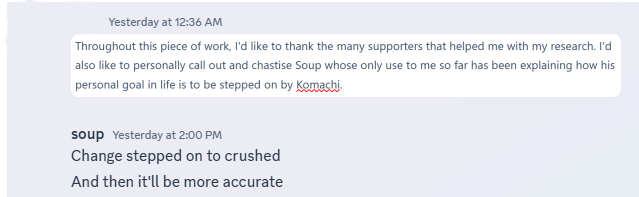
Throughout this piece of work, I’d like to thank the many supporters that helped me with my research. I’d also like to personally call out and chastise Soup whose only use to me so far has been explaining how his personal goal in life is to be “crushed” by Komachi.
To begin with, I have somewhat of a slight experience with Touhou when I was a youth back before the advent of smartphones (yes, I’m that old). I remember being at a friend’s house and watching his younger brother play this bullet hell on screen. I didn’t really think too much about it at that time; although, even to this day, the music was rad.
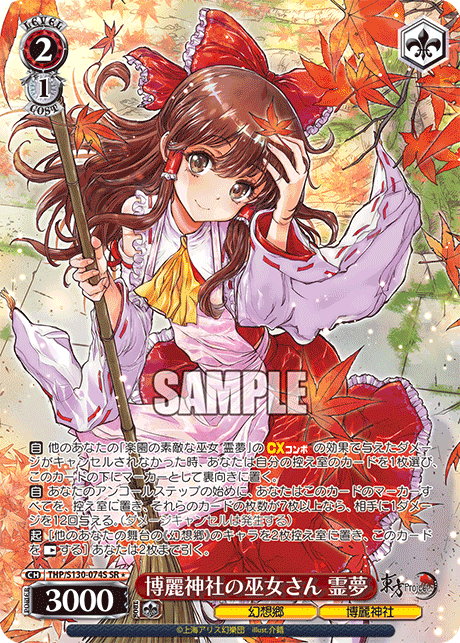
THP/S130-074S-SR+ 博麗神社の巫女さん 霊夢 (center)
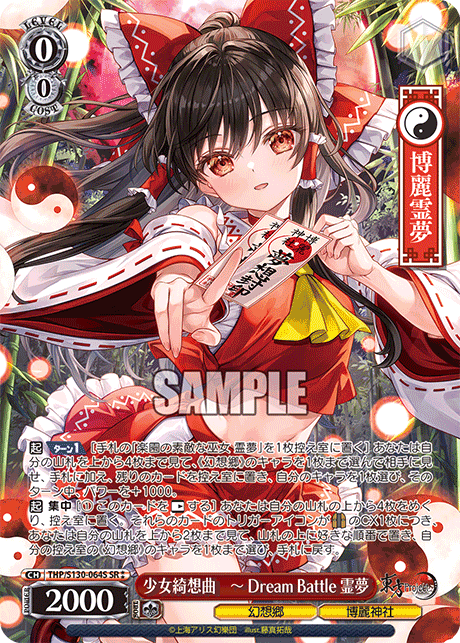
THP/S130-064S-SR+ 少女綺想曲 ~ Dream Battle 霊夢 (right)
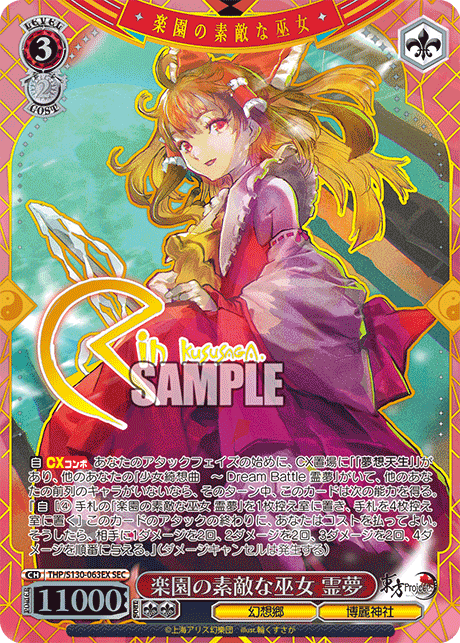
The first set of cards that I wanted to showcase are the Reimu combo above. I personally chose the secret art because I think it gives off the vibe of the 90s. It has this sort of older style that feels more akin to games and anime media during that time period rather than the more moe-accentuated looks that we are used to today.
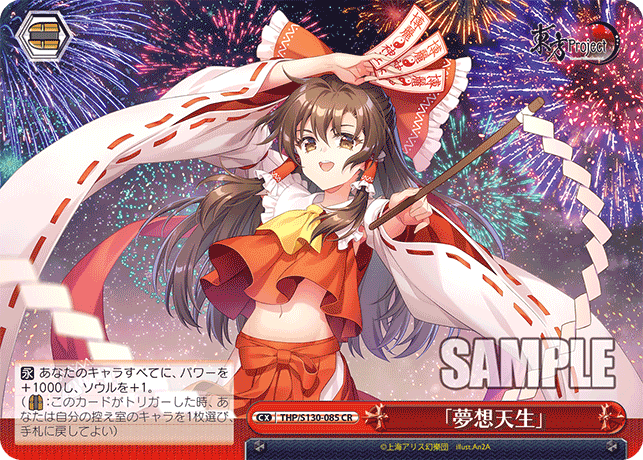
I’d like to thank Ato for pointing this out. I think it is very much a reference to the game above which is very heavily evidenced by the fact that the brainstormer’s name is quite literally a BGM theme, more specifically, this same theme above that’s Reimu’s boss track. From what I can personally detail based on Reimu’s own moves within the above game, Reimu seems to surround herself with eight yin-yangs which then fire her ultimate technique, 夢想天生. Each of the yin-yangs might be represented by the amount of damage instances that 3/2 Reimu’s finisher deals including her personal attack. As for the 2/1’s twelve-pings, I don’t have any clue about that one.
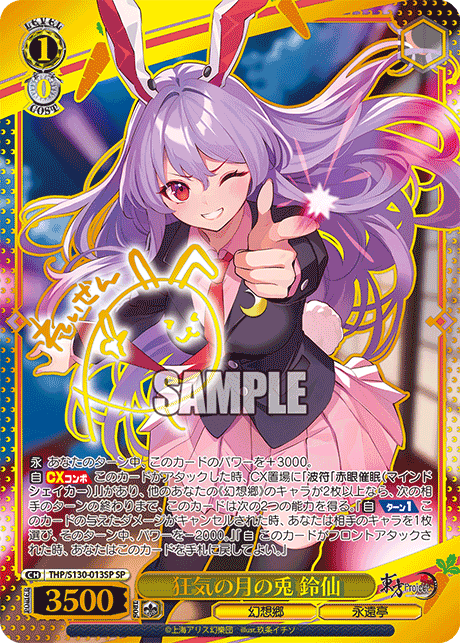
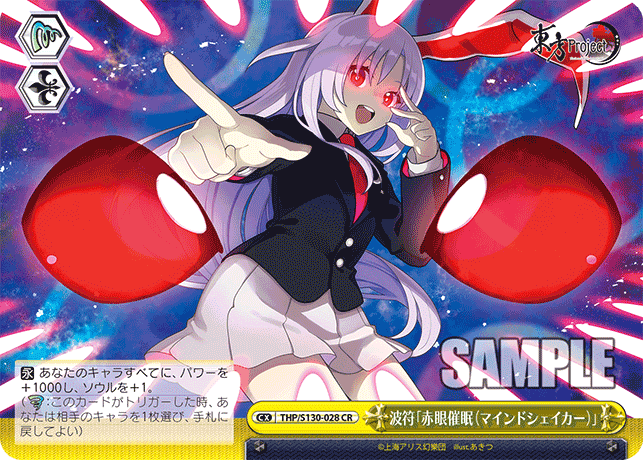
Another potential reference can be found through Reisen’s attack above. It calls back to the same game as Reimu’s before, Imperishable Night, with Reisen’s special attack, 波符「赤眼催眠(マインドシェイカー)」. Supposedly, based off the fandom site, Reisen’s attack shoots an illusion at you which I think references her unique Oboro design. If your opponent falters and blinks, symbolized by cancelling within the card game, they will be punished with that power decrease on board. Similar to her own attack, the Oboro effect allows her to blink on and off the stage.
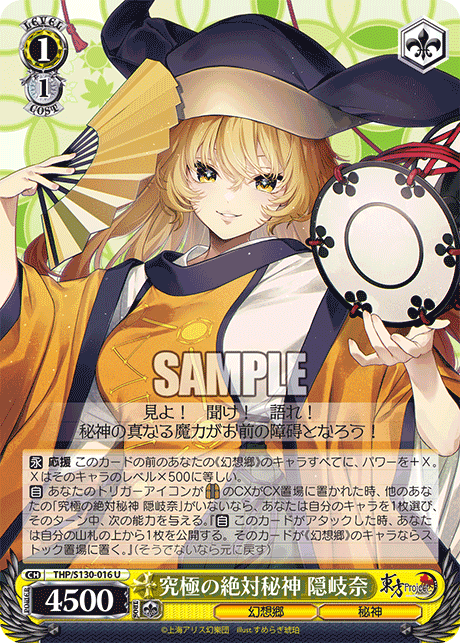
Don’t worry, Imperishable Night is not the only game being referenced. The above card depicts Okina Matara, one of the antagonists of the game Hidden Star in Four Seasons. In that game, she has the power to manipulate literal doors, which I think is well mentioned here through her own secondary ability, granting you a special power when you do play a door climax.
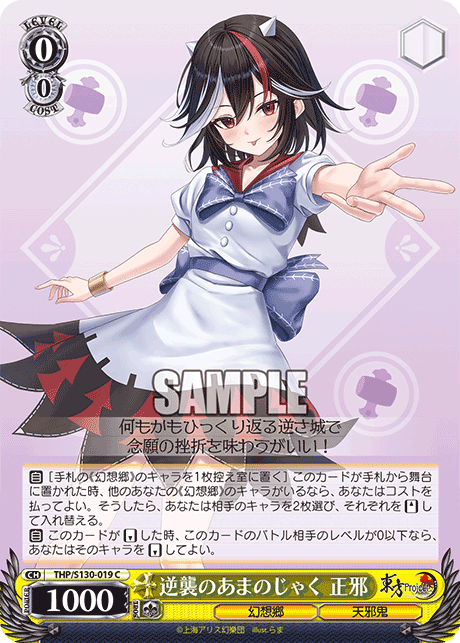
Even smaller one-off characters like that of Seiya above may have their own unique references. From the game of Double Dealing Character, Seiya can manipulate space itself, mainly on that of her own personal spells, letting her flip the stage in different dimensions. As such, the ability to both swap and stand your opponent’s characters feels very thematic.
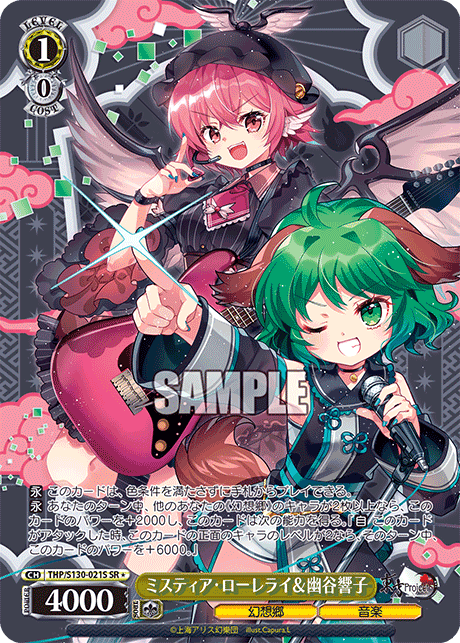
Even something as subtle as Lorelei and Kyouko Kasadani’s small scene in the Touhou book, Symposium of Post-mysticism, gives a sense of comedic relief and also gets a reference on the cards as well.
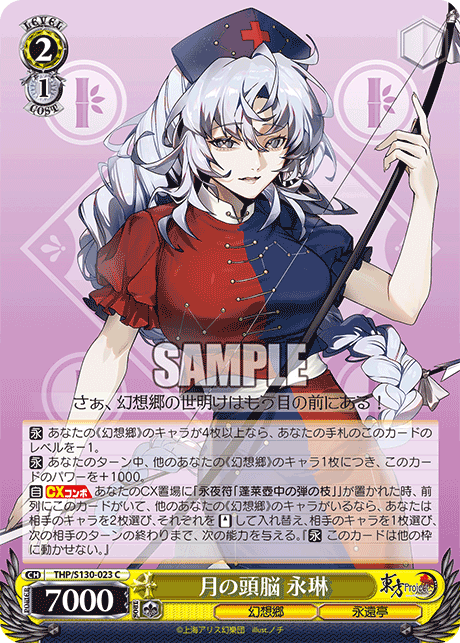
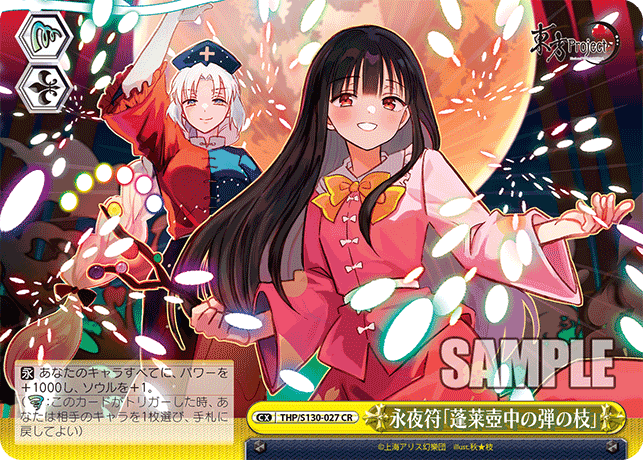
Once again from Imperishable Night, Eirin combines with Kaguya to trap their opponent in place in a separate section of the stage, locking them from moving or shall they face their wrath of endless magical bullets.
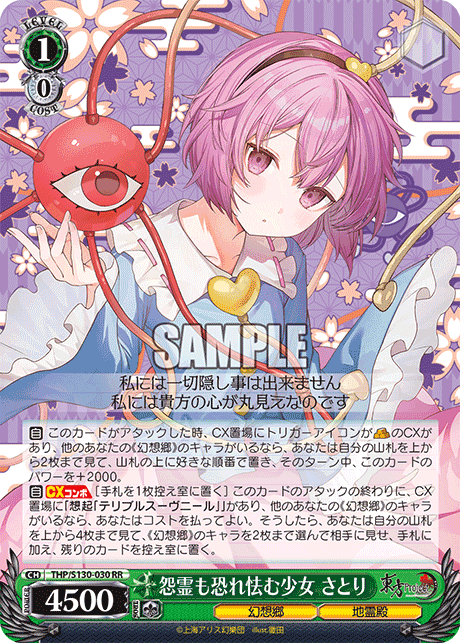
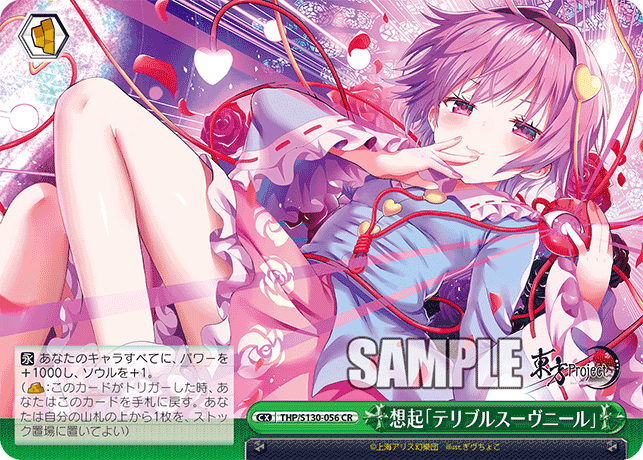
A light nod to Satori’s literal satori powers, she can use her magical eyes to see through your deck, giving you a glimpse at the future.
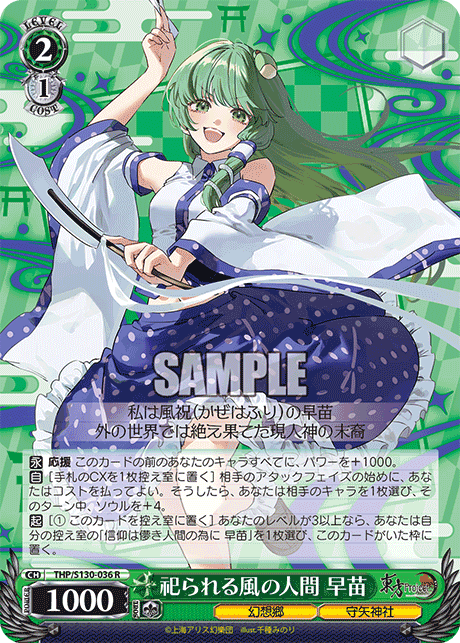
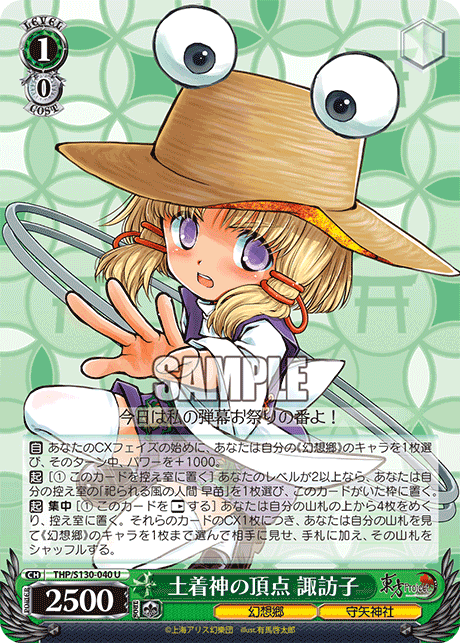
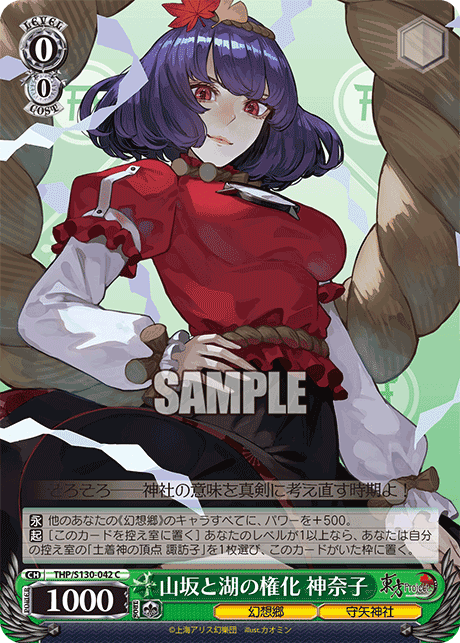
Sanae and Suwako’s pairing here may be a story reference to the characters’ relationship. Sanae has a unique climax discard ability that grants one of your opponent’s characters a large amount of soul. This may be due to her general disposition to call upon miracles in hope that the added soul might save you with a cancel. Suwako canonically leaves the battlefield and changes into Sanae, referring to her hand-off of her shrine to the young maiden. Not pictured here is Sanae’s upgraded form at level three, which the assist can change into which is consequently named after Sanae’s own theme song. Kanako, whom takes over the shrine after Suwako is defeated is shown below, bringing out Suwako at level one.
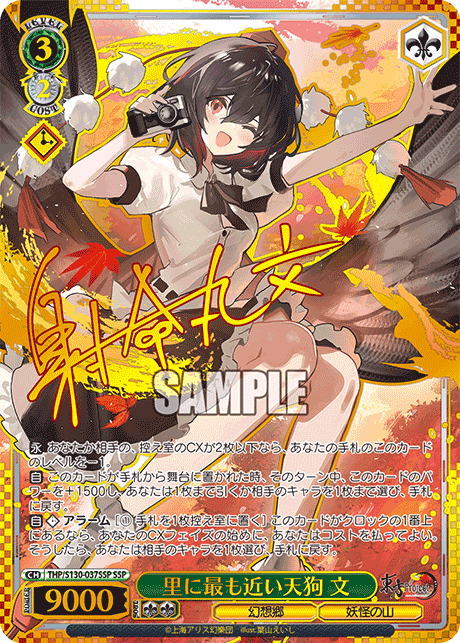
Seeking less combative methods, Aya blows away your opponent’s cards as the fastest spirit alive and is able to do so while being on the field or in your clock.
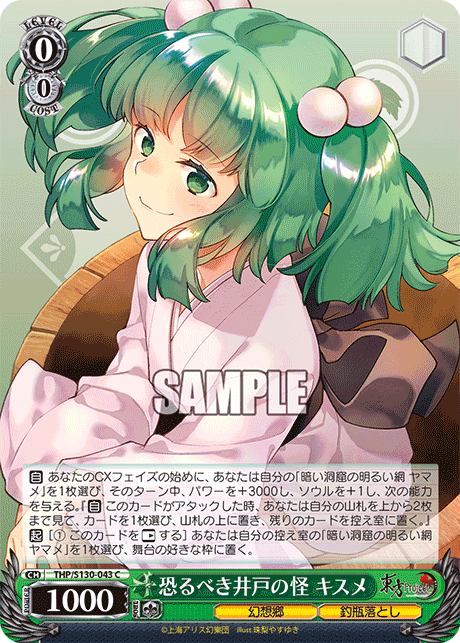
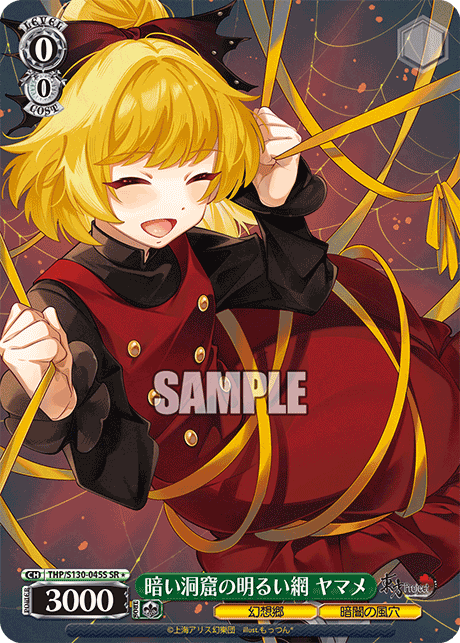
Kisume and Yamame are both bosses from the same stage in Subterranean Animism. Kisume is the mid-boss while Yamame is the final stage boss.
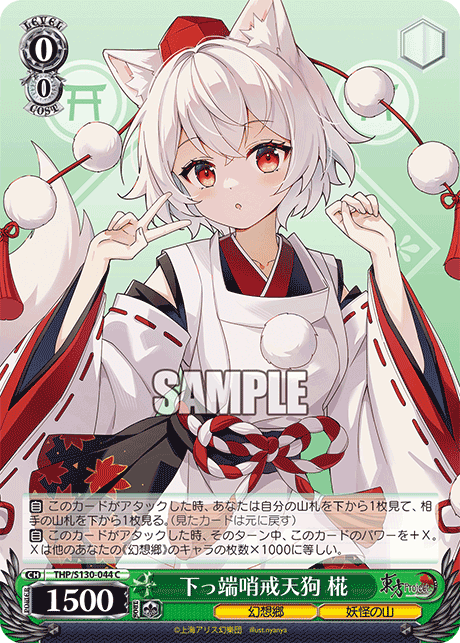
Momiji can apparently see so far ahead that when she attacks, she can even see both the bottom card of yours and your opponent’s decks.
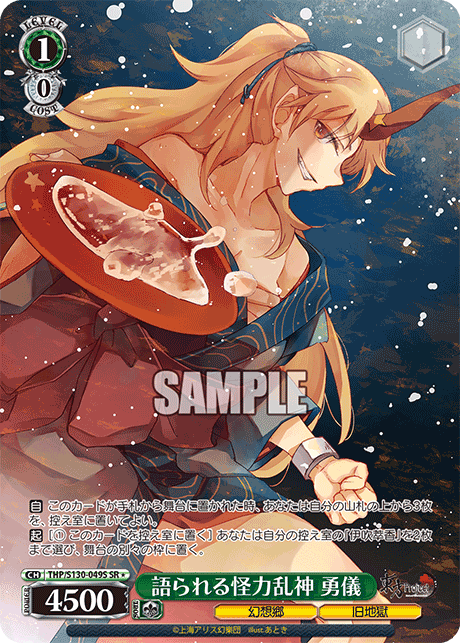
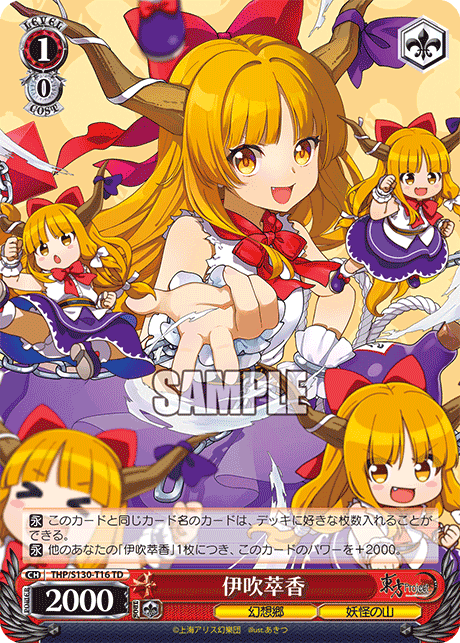
Yuugi is able to spawn her rival oni at the cost of sacrificing herself, filling up your stage with the other claimant for the strongest youkai, Suika.
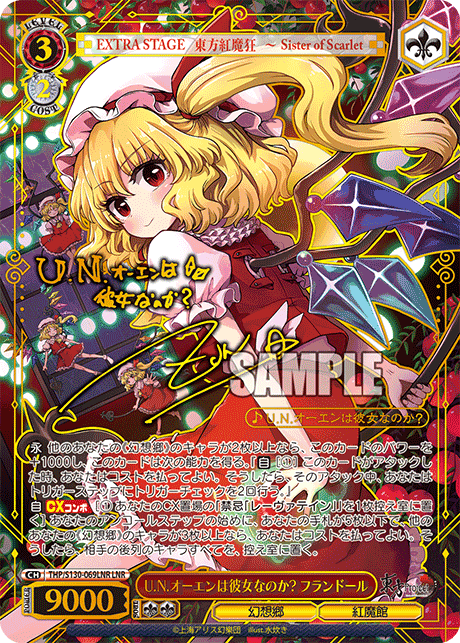
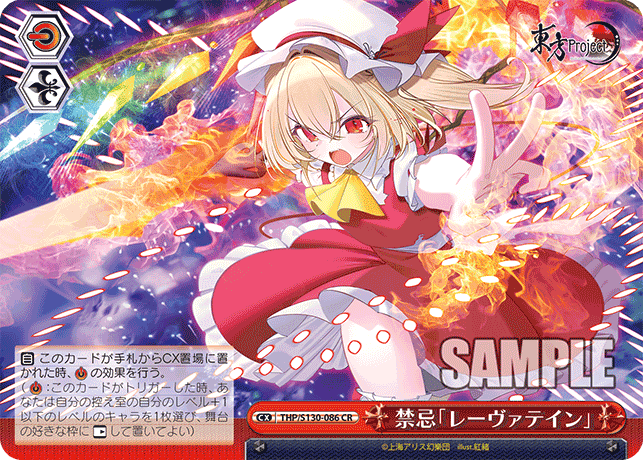
If you want to survive Flandre’s Kinki Laevatain, your best bet is to hide your character at the very front because she’ll decimate you if you are at the back.
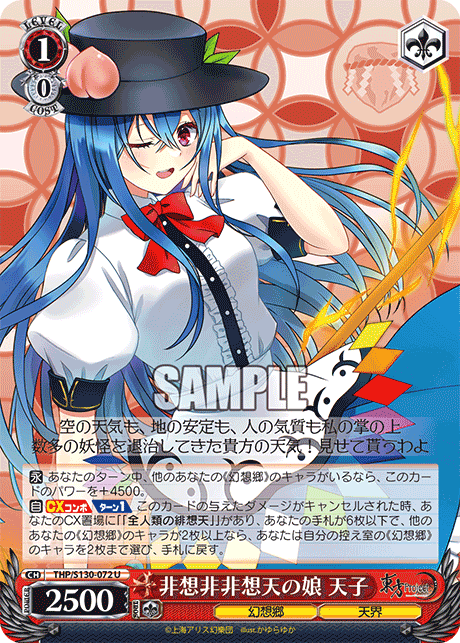
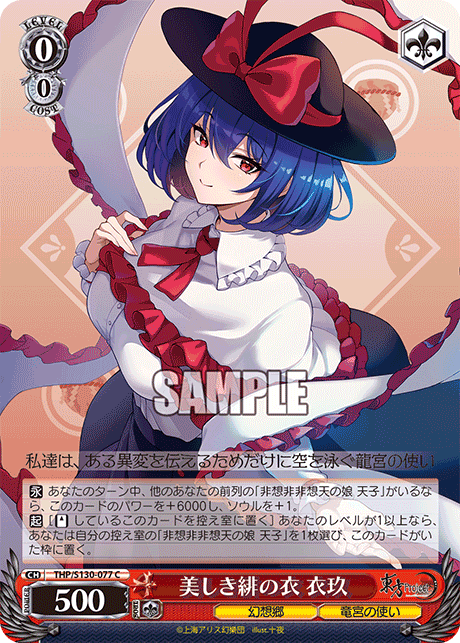
THP/S130-077C 美しき緋の衣 衣玖 (center)
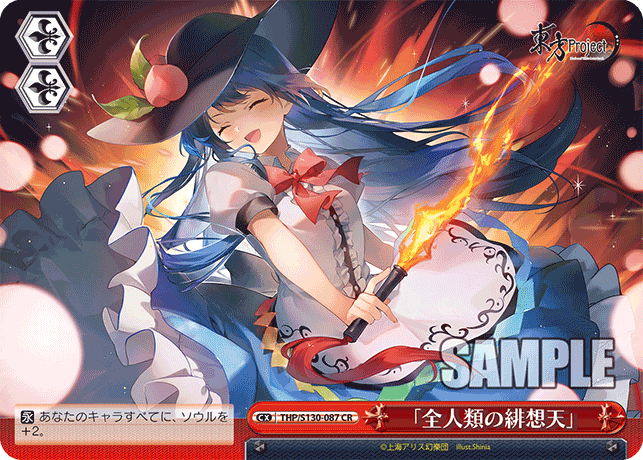
THP/S130-087CR 「全人類の緋想天」(right)
Tenshi’s all-out attack goes all-in, an eviscerating ray of death, determined to vaporize any foe. Iku herself transforms into Tenshi, reminding her of her need to report events to the higher-ups.
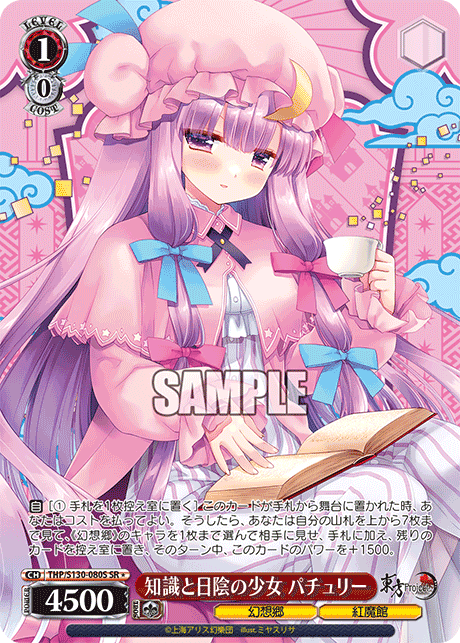
As a magician of the five elements with the two celestial beings: Fire, Water, Wood, Metal, Earth, Sun, and Moon, Patchouli can manipulate all seven powers to serve her will.
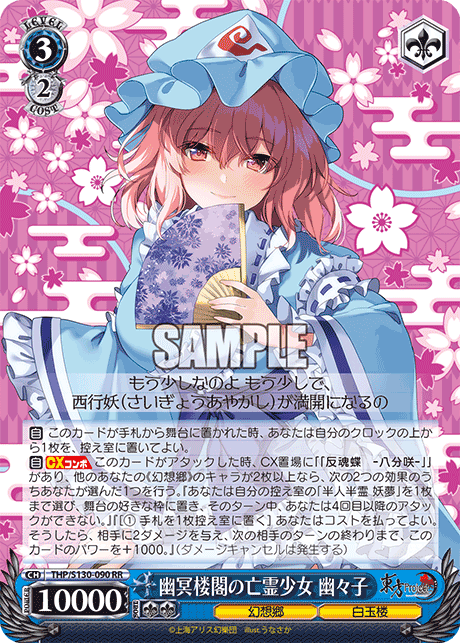
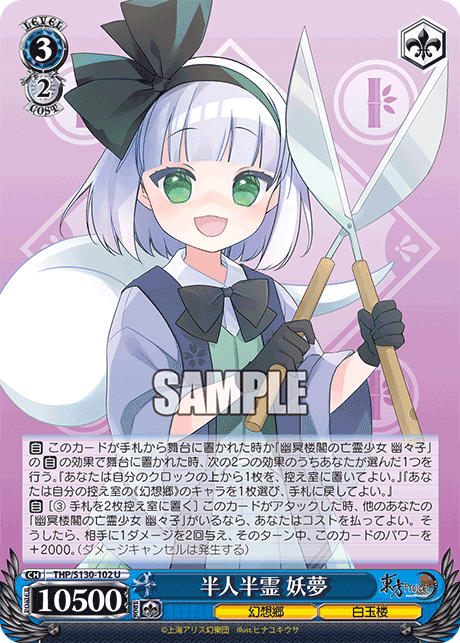
THP/S130-102U 半人半霊 妖夢 (center)
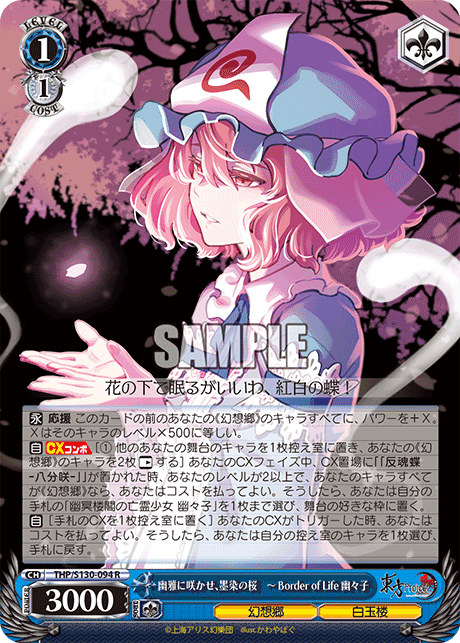
THP/S130-094R 幽雅に咲かせ、墨染の桜 ~ Border of Life 幽々子 (right)
As the boss of Youmu, Yuyuko is more than capable of using her ghostly powers to dominate the board by either summoning her faithful servant, Youmu, or dealing a short instance of damage. To add to this, with the level assist on the right, by performing the sacred rites, you can even spawn level three Yuyuko out on field early.
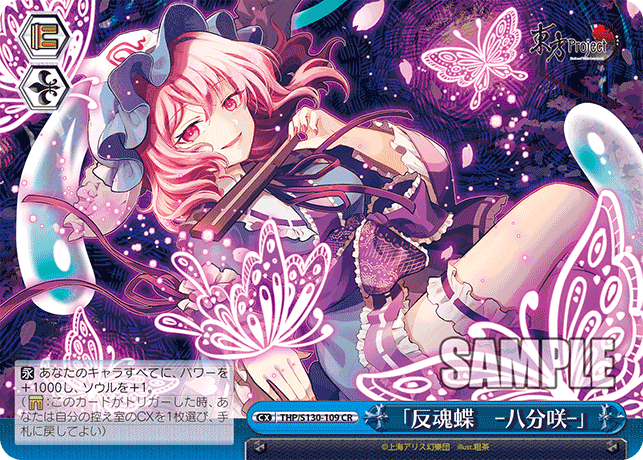
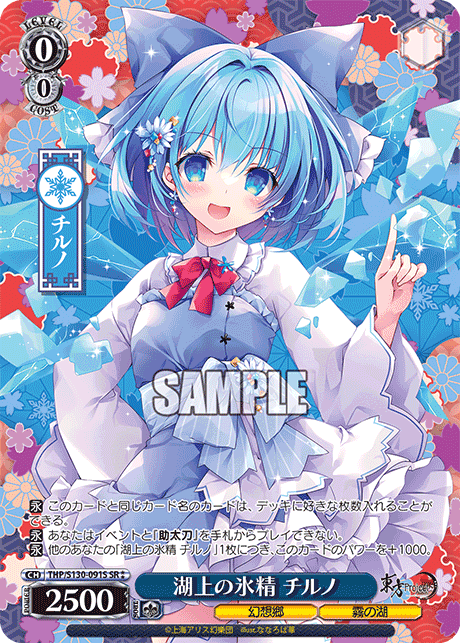
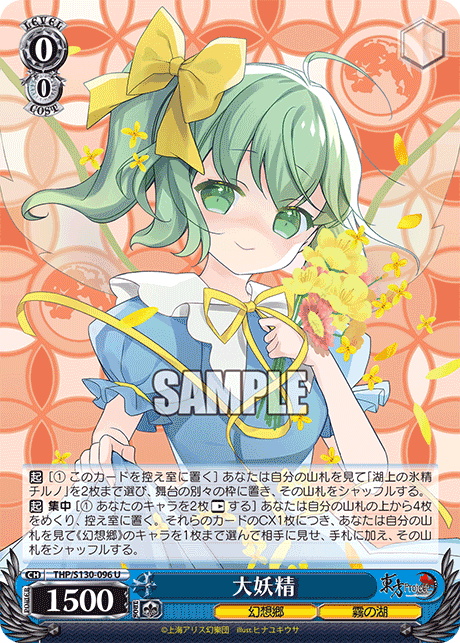
THP/S130-096U 大妖精 (center)
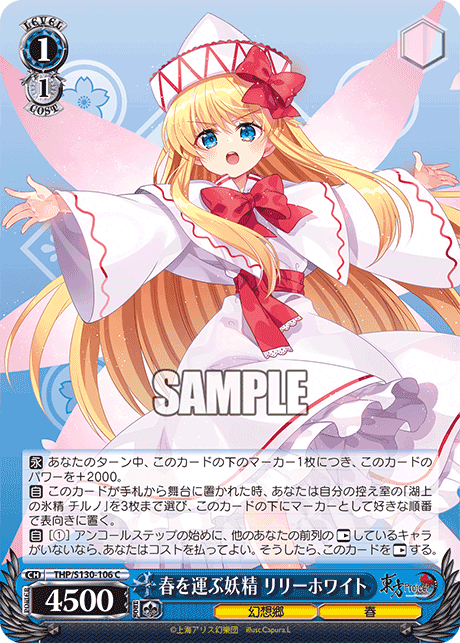
THP/S130-106C 春を運ぶ妖精 リリーホワイト (right)
Believe it or not, Cirno is the strongest (according to Cirno); she is also a genius (according to Cirno) and invincible (according to Cirno). As such, for each copy of Cirno on the field, her pride grows even further, granting her both her much needed confidence and power.
Luckily for Cirno, she is supported by Daiyousei who can bring her back out onto the field. Lily White who appears later in the game can simply transform some of your defeated Cirno(s) in your waiting room (up to three) into her own magical power supply.
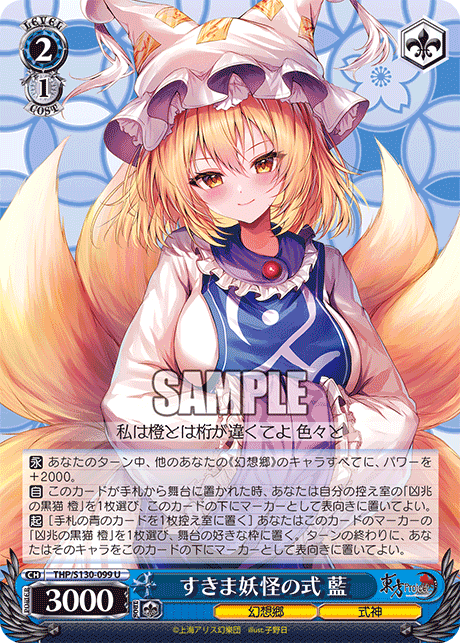
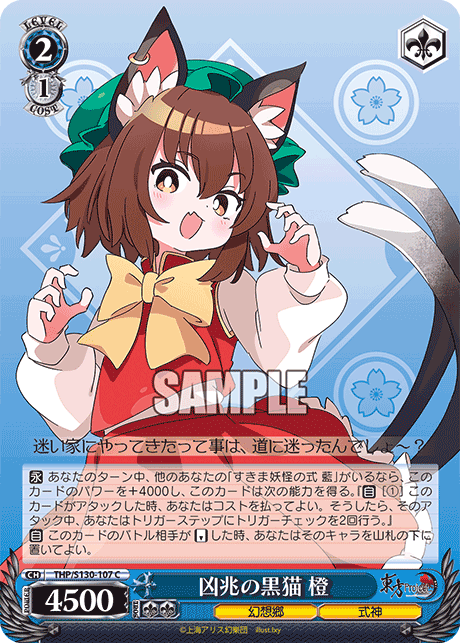
Ran and Chen, master and servant, will both appear on stage as needed to help pummel your foes.
And with that, we have finally reached the end of this post highlighting some of the key references I’ve found from the set itself. I’m sure there’s several that I’ve missed, but I’m also sure that you Touhou fans can probably fill in the rest or correct me where needed. It’s been a blast researching for this post and I’d like to personally thank the Touhou EN Wiki for its large catalogue of information and YouTube for showcasing some of the spells (many of the climaxes refer to spells from the girls). As for those who are looking to open cases in chase of the shiny foil girls, I wish you the best of luck.
Honestly, the soundtracks for the games are awesome, and yes, Soup, you should dive into games other than Touhou Hisoutensoku. And no, you can’t blame your skills lacking because of weather change either.
Also, I expect a perfect run of this while we play if I ever come into contact with any of you playing this set.